
FX Markets Explained: Exchange Rates, Spot, Forwards, PPP & Interest Parity
Problem: You see EUR/USD, GBP/USD and “the dollar strengthened”—but can you immediately explain who gained value and why?
Affinity: FX gets confusing fast when exchange-rate direction, interest rates, inflation and trade flows are learned as separate facts.
Solution: Learn one framework connecting currency pairs, spot and forward rates, PPP, interest parity, trade and expected returns.
Offer: This focused course turns foreign-exchange terminology into a structured picture of how currency markets actually work.
Narrowing: If you still have to stop and think whether a rising currency pair means the base currency strengthened or weakened, that gap is worth fixing.
Action: Do not wait for the next central-bank decision, inflation surprise or currency headline to force you to relearn the basics from scratch.
Stop Reading FX Headlines Without the Exchange-Rate Framework
Learn how currencies are quoted, what makes them appreciate or depreciate, and how interest rates, inflation and trade connect to FX.
View the FX Markets Course on Udemy →Why Foreign Exchange Markets Matter More Than Most People Realize
Currencies sit underneath international trade, cross-border investing, tourism, overseas business activity and many global financial transactions.
Every time money must move from one currency into another, an exchange rate becomes part of the transaction.
That means FX movements can influence:
- the domestic cost of imported goods,
- the foreign-currency price of exports,
- international company revenues and expenses,
- returns on foreign investments when translated back into home currency,
- and the relative attractiveness of deposits and financial assets across countries.
If the quotation convention is unclear, every later discussion about inflation, trade, interest rates and central-bank policy becomes harder than it needs to be.

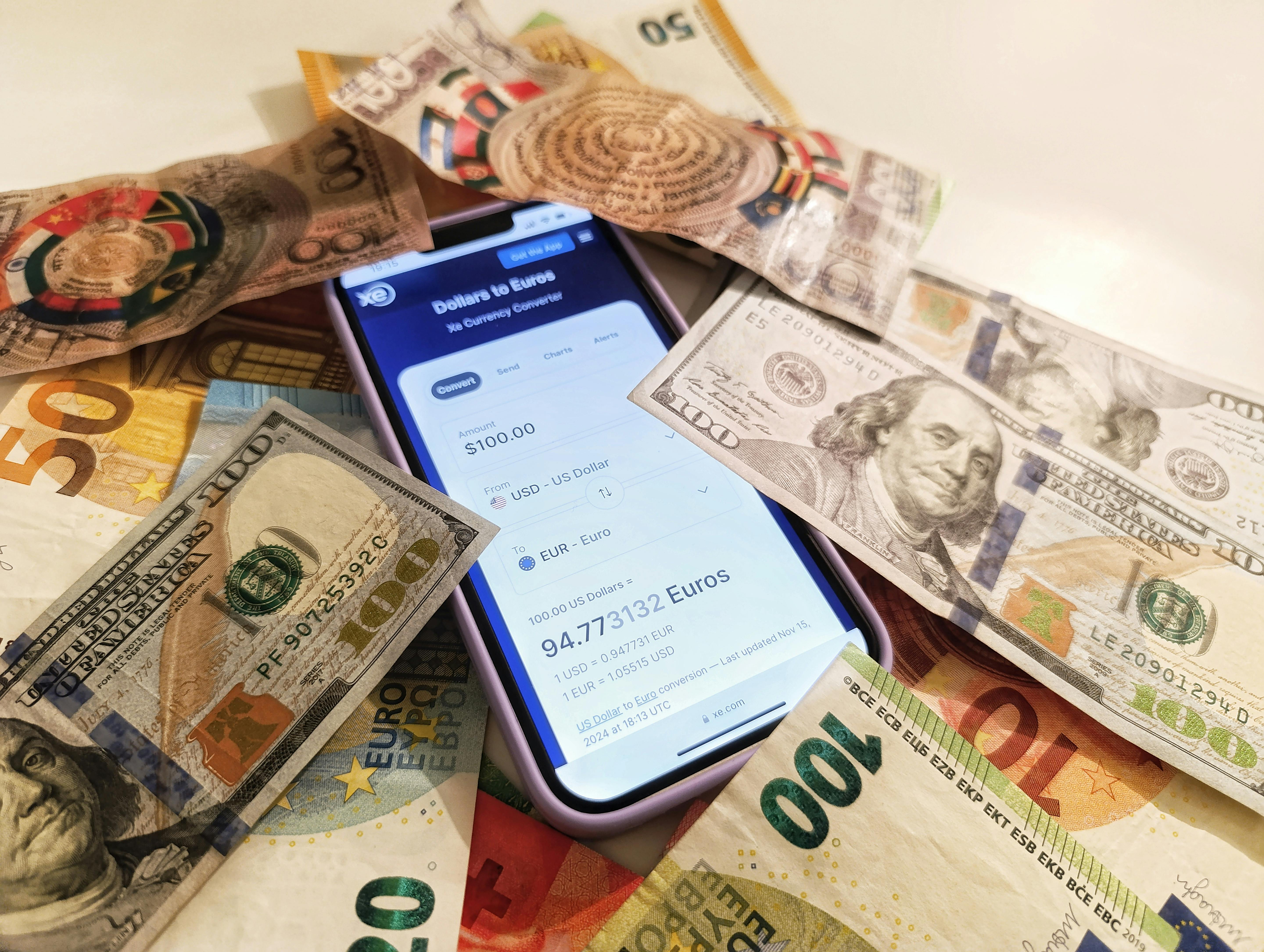

FX connects market prices, real currency conversion and international trade. Sources: Pexels FX screen, currency converter, global trade.
What You Will Learn in This Foreign Exchange Markets Course
FX Markets Explained: Exchange Rates & Currency Markets builds a structured understanding of how currencies are priced, why they move and how exchange-rate changes connect to trade and global finance.
FX Markets Course at a Glance
| Course | FX Markets Explained: Exchange Rates & Currency Markets |
|---|---|
| Level | Beginner-friendly |
| Sections | 2 |
| Lectures | 5 |
| Current length | Approximately 1 hour 17 minutes |
| Current listing update | June 2026 |
| Core FX topics | Currency pairs, exchange-rate determination, appreciation, depreciation, spot rates and forward rates |
| Exchange-rate theories | Law of One Price, Purchasing Power Parity and Interest-Rate Parity |
| Prior finance knowledge | Not required by the current course listing |
The FX Framework You Need to See
Market Forces Currency Demand
& Supply Exchange-Rate
Movement Trade, Business
& Investment Effects
Foreign exchange is easier to understand when you stop treating currency prices as isolated numbers.
Interest rates, inflation, expectations and cross-border transactions can change demand for currencies. Those changes can affect exchange rates, which then feed into trade, business costs and international investment returns.
How Exchange Rates and Currency Pairs Work
An exchange rate tells you the price of one currency in terms of another.
For example, if:
↓
€1 Buys $1.10
The first currency is the base currency. The second is the quote currency.
EUR/USD asks: “How many US dollars does one euro buy?”
Once that convention is clear, appreciation and depreciation become much easier to interpret.
Currency Appreciation and Depreciation Without the Confusion
Suppose EUR/USD moves from 1.10 to 1.15.
1.10 → 1.15
↓
Euro Appreciates Against the US Dollar
One euro now buys more dollars than before.
If EUR/USD instead falls from 1.10 to 1.05, the euro has depreciated against the dollar under that quotation.
Whether a move represents appreciation or depreciation depends on which currency is the base and which is the quote currency.
Spot vs Forward Exchange Rates
The course distinguishes between current currency exchange and agreements for future exchange.
| Concept | What It Means |
|---|---|
| Spot exchange rate | The exchange rate used for a current or near-term currency transaction under the market's settlement convention. |
| Forward exchange rate | An exchange rate agreed today for a currency transaction that will occur at a specified future date. |
A business expecting to receive or pay foreign currency in the future may care about the forward market because the eventual home-currency value of that payment can change when exchange rates move.
+
Exchange-Rate Uncertainty
↓
Potential Need for Forward Planning or Hedging
Build the Currency Framework Before the Next FX Headline
If spot rates, forward rates, PPP and interest parity still feel like unrelated definitions, learn the framework that connects them.
Check the Curriculum & Current Udemy Price →How Currency Movements Affect Imports and Exports
Foreign exchange rates matter because international transactions often cross currency boundaries.
A stronger domestic currency can, all else equal, make foreign goods less expensive in domestic-currency terms.
At the same time, it can make domestically produced goods more expensive for some foreign buyers when prices are translated into their currencies.
Law of One Price and Purchasing Power Parity
Law of One Price
The Law of One Price provides a simple theoretical benchmark: identical tradable goods should not sustain completely different prices across locations once prices are converted into the same currency and relevant frictions are considered.
In the real world, transportation costs, taxes, market structure, product differences and other frictions can prevent exact equality.
Purchasing Power Parity (PPP)
Purchasing Power Parity extends the intuition from individual goods toward overall price levels.
At a high level, PPP links long-run currency values to relative purchasing power and inflation across economies.
↕
Long-Run Exchange-Rate Pressure
Short-run currency markets can be influenced by interest rates, expectations, capital flows, policy news and changing risk sentiment.
Interest-Rate Parity and Expected Returns on Deposits
Short-run FX analysis often asks a different question:
After Interest and Expected Exchange-Rate Changes?
A higher interest rate in one country does not automatically mean its currency must provide the better final return.
Why?
Because an investor comparing deposits in two currencies must also consider what may happen to the exchange rate over the holding period.
=
Interest Return + Expected Currency Movement
Interest-rate parity provides a framework for thinking about how interest rates and exchange rates can be linked across currencies.
Markets also care about expectations, inflation, policy credibility, future exchange rates and the return available in competing currencies.
Long-Run and Short-Run FX Forces Are Not the Same Thing
| Perspective | Useful Questions |
|---|---|
| Long run | How do relative prices, inflation and purchasing power relate to exchange-rate adjustment? |
| Short run | How do interest rates, expected returns, policy expectations and currency demand affect today's exchange rate? |
This distinction matters because a theory that helps explain long-run currency pressure may not explain today's intraday or weekly market move.
How to Read FX News More Intelligently
Currency headlines often compress several moving parts into one sentence.
You might read:
“Dollar strengthens after rate decision.”
“Euro falls as inflation slows.”
“Currency depreciation boosts export competitiveness.”
“Forward rates move as interest-rate expectations change.”
Instead of treating each headline as a separate fact, ask:
- Which currency pair is being quoted?
- Which currency appreciated and which depreciated?
- Did interest-rate expectations change?
- Did inflation expectations change?
- Is the story about spot FX or a future exchange rate?
- How might the currency move affect imports, exports or foreign returns?
The goal is to understand what the market language means and which economic forces the headline is describing.
Five FX Questions You Should Not Have to Relearn Every Time
The Cost of Skipping Foreign-Exchange Fundamentals
FX concepts keep reappearing throughout finance and economics.
You encounter them when studying:
- central-bank policy,
- interest rates,
- inflation,
- international trade,
- multinational companies,
- foreign investments,
- economic news,
- and global financial markets.
If the FX framework is missing, the same confusion keeps returning:
Did the euro strengthen or did the dollar weaken?
Why can a higher interest rate change currency demand?
What is the difference between spot and forward FX?
Why does inflation matter to purchasing power parity?
Why can the same currency move help an importer and hurt an exporter?
It pushes the same knowledge gap into every later topic involving international trade, monetary policy, inflation and cross-border finance.
That is the real opportunity cost: more repeated searching, more fragmented learning and a greater chance of misreading what a currency headline actually means.
Build the FX Framework Before You Need It
Learn currency pairs, spot and forward rates, appreciation, depreciation, PPP and interest parity as one connected system.
Explore FX Markets Explained on Udemy →Who Should Take This Foreign Exchange Markets Course?
What This Course Is—and What It Is Not
This is an educational introduction to foreign exchange markets, currency pricing, spot and forward rates, PPP and interest-rate parity.
Its purpose is to help you understand how exchange rates work and how currency movements connect to economic and financial forces.
It is not a forex signal service, a promise of profitable currency trading or a substitute for proper risk management and financial analysis.
Its value is more fundamental: building the framework that lets exchange rates, interest rates, inflation and trade fit together as one system.
Frequently Asked Questions About Foreign Exchange Markets
Is this FX markets course suitable for beginners?
Yes. The current Udemy listing says no prior finance or economics background is required.
What is the foreign exchange market?
The foreign exchange market is the market in which currencies are exchanged and priced against one another through exchange rates.
What is a currency pair?
A currency pair quotes the value of one currency, the base currency, in terms of another currency, the quote currency.
What is the difference between spot and forward exchange rates?
A spot rate applies to a current or near-term currency transaction, while a forward rate is agreed today for a transaction at a specified future date.
What does currency appreciation mean?
A currency appreciates when its value rises relative to another currency. The correct interpretation depends on how the currency pair is quoted.
What is Purchasing Power Parity?
Purchasing Power Parity is a long-run framework connecting relative price levels and purchasing power across countries to exchange rates.
What is interest-rate parity?
Interest-rate parity is a framework linking interest rates and exchange rates across currencies by considering relative returns and currency movements.
Does the course explain how currencies affect imports and exports?
Yes. The course covers how appreciation and depreciation can influence international trade, including imports and exports.
How long is the FX markets course?
The current Udemy listing contains 2 sections, 5 lectures and approximately 1 hour and 17 minutes of material.
The Next Currency Headline Should Mean More Than “Dollar Up” or “Euro Down”
Currencies will continue to move.
Interest-rate expectations will change.
Inflation data will surprise markets.
Importers and exporters will face changing exchange rates.
International investments will continue to carry currency exposure.
The question is whether every new FX story forces you to rebuild the same basic knowledge from zero.
Once you understand quotation direction, spot and forward rates, appreciation and depreciation, PPP and interest parity, currency-market developments become much easier to place inside a coherent framework.
Ready to Understand What Exchange-Rate Moves Are Actually Telling You?
Open the course page, review the curriculum and current Udemy price, and decide whether currency pairs, spot rates, forward rates, PPP and interest parity should remain blind spots the next time FX moves.
View the FX Markets Course & Start Learning →Disclosure: This article contains an instructor referral link to Udemy. Course pricing, promotions, availability, curriculum and platform features may change. Review the current Udemy course page before enrolling. Educational information only and not individualized financial or investment advice.
